

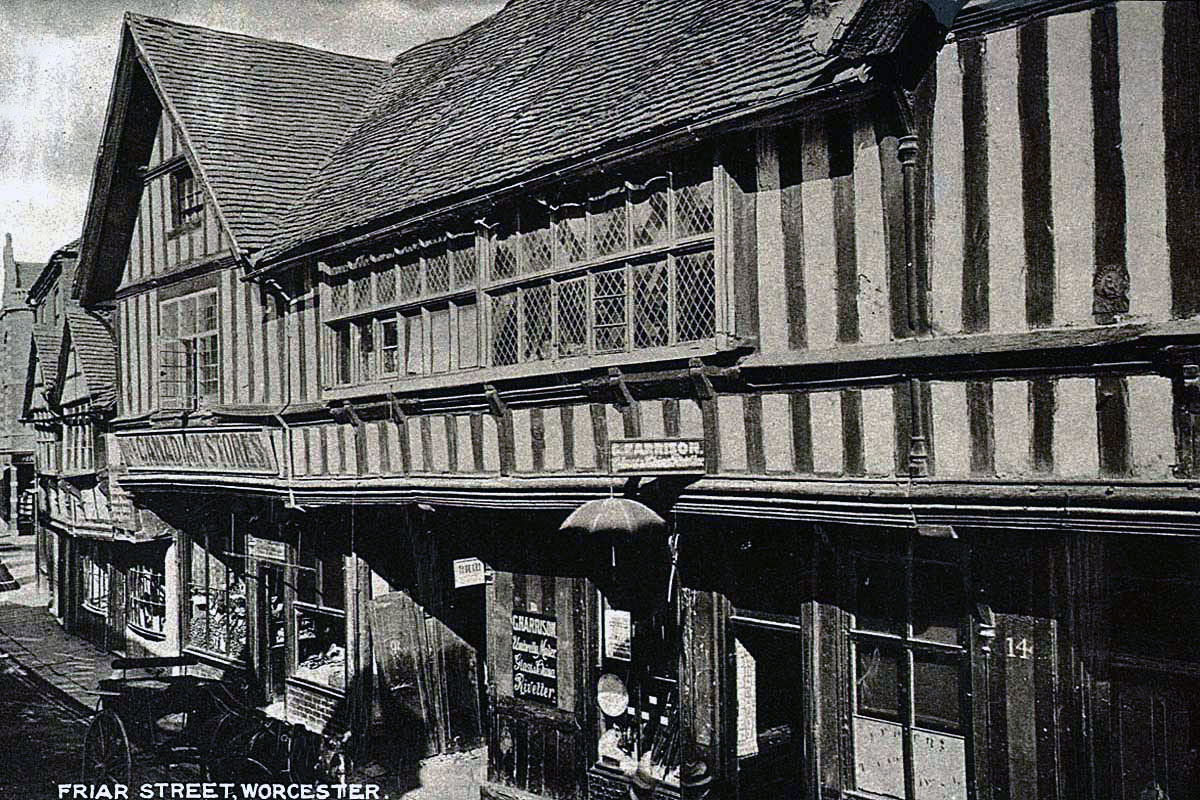
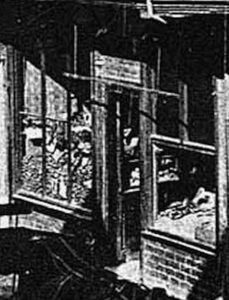
 On a previous blog post we posed the question in our as to what exactly did the Canadian Stores sell circa 1896. We get a good view of the shop-front in this picture of number 12 (the northerly quarter of today’s Greyfriars, using “old” style street). Could those be onions and potatoes on display?
Our researchers have been looking into this and come up with a possible answer. Whilst it has not been possible to track down much detail about Worcester’s Canadian Stores. That is stores in the plural as there was one at 16 High Street before this one. An article in the Westminster Gazette from 1897 gives the clue. This tells that a Canadian Shop is to be opened in Westminster for “the sale of general Canadian products, furs, fruit, cheese, and butter, &c”. So everything and anything including Canadian-style kitchen sinks perhaps?
Remember that is is the end of the 19th century. The empire at its zenith and steam ships criss-crossing the oceans. This made it possible for goods from all over the globe to reach Britain relatively quickly. Presumably quickly enough to prevent the butter going sour at least. So the governments of countries such as Canada and Australia were keen to tap into a new market for their wares. Thus we see a “Canadian Bacon Shop” opening in Birmingham and a shop selling Canadian beef in Preston, both in 1877. That same year the Liverpool Mercury has a situations vacant ad for a manager of a “Canadian Meat Shop”. That establishment had already been trading for 3 years.
Exhibition Clues
There were also a number of trade exhibitions at the turn of the 20th century. Many of these it seems had Canada Halls. The contents of these were primarily geared towards industry and manufactured goods. However, there were some products on display that could have found there way into a Canadian store. One such exhibition took place in Wolverhampton in 1902. A write-up on the Wolverhampton History & Heritage website gives this little nugget:
In the Canadian Hall were displays featuring the country’s natural resources, including minerals, gold ore, clay, timber, and agricultural goods such as meat, fruit, whisky, butter, cheese, eggs, grain, grasses, and canned goods. There were also displays of photographs, and landscape paintings.
Butter makes several other appearances in their displays at other exhibitions too. At the Franco-British exhibition of 1908 sculptures of the stuff were made. One of these even showed the then H.R.H Prince of Wales stood next to his horse. What became of all that grease is not documented.
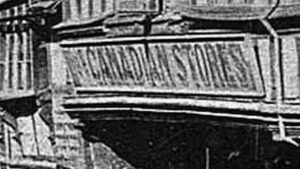 How successful these ventures turned out to be is unclear. Worcester’s own Canadian Store had ceased to trade by about 1900. Sadly its owner, Christopher Poytress, went bankrupt shortly after this photograph was taken. Christopher Poytress was a grocer and provisions dealer by trade and hailed from not Canada but Cheltenham!
References
Image taken from the Changing Face of Worcester website. Details of shops selling Canadian products taken from contemporary local and national newspapers.